ServicesAppliance Removal
Decatur, GA Appliance Removal
Done with a refrigerator, washer, dryer, range or water heater? We remove it from the kitchen, basement or side yard. Our crew does the heavy lifting and the stairs, then sends every unit to a recycler rather than the landfill.
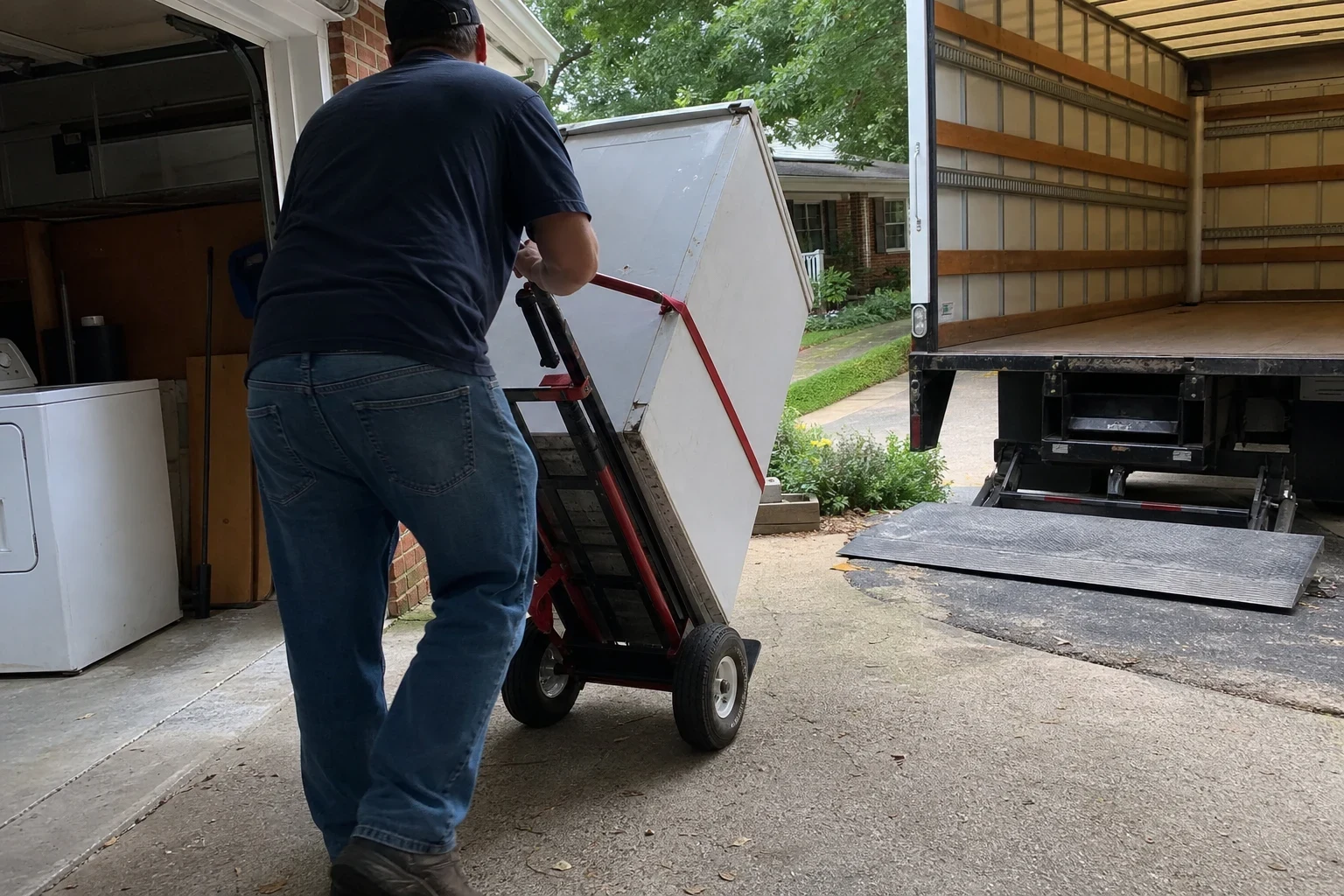
When hauling it yourself stops making sense
A full-size refrigerator weighs well over 200 pounds, and most of that sits in the compressor at the bottom rear, so it tips backward on a stair. Front-load washers carry a concrete counterweight. A 50-gallon tank water heater still holds sediment and a few gallons of water even after you think it is empty. These are the reasons appliances end up sitting in garages for months.
Appliance removal is the right call when the unit is broken, replaced, or in the way of a remodel, and you do not have two strong people, a dolly and a truck on the same afternoon. Plenty of older homes around Decatur have narrow interior doors, tight basement stairs and steep front steps, which is exactly where a heavy unit scrapes a wall or a doorframe. We measure the path first and plan the carry around it.
The job also ends somewhere useful. Steel cabinets, copper tubing and compressors have recovery value, and anything with refrigerant has to go to a facility that can capture the gas. We handle that leg, so you are not wrestling a fridge into a pickup and hunting for a drop-off that will accept it.
What the job includes
- Refrigerators and freezers
- Fridges, chest freezers and wine coolers contain refrigerant in a sealed system. We keep the lines intact during the carry and take the unit to a recycler that recovers the refrigerant before the cabinet is scrapped.
- Washers and dryers
- We pull the unit from the wall, unhook the fill hoses and drain hose, and check that the drum is empty. Electric dryers are unplugged and the vent duct is set aside. If a dryer runs on gas, we ask that the gas line be shut off and capped before we arrive.
- Water heaters
- Tank units are heavy and often sit in basements, closets or crawlspace entries. If the tank is still connected, we ask that a plumber disconnect it first; once it is free, we drain what remains and carry it out.
- Ranges, dishwashers and small units
- Ranges, wall ovens, dishwashers, microwaves, window AC units and dehumidifiers all go. Dishwashers usually need the supply line and drain hose separated under the sink, which we check before pulling the unit forward.
- Protecting the path out
- We lay floor runners, pad door jambs and use an appliance dolly with straps so the unit never drags across hardwood or tile.
- Recycling and sweep-up
- Steel, copper and compressors go to scrap recyclers. We sweep the spot where the appliance stood, which is usually the dustiest square foot in your home.
Signs an appliance is ready to go
The fridge runs constantly
A compressor that never cycles off, or a back panel that is hot to the touch, usually means a failing compressor or a refrigerant leak. Repair on an older unit often costs more than the fridge is worth.
Rust at the bottom of the water heater
Rust streaks or a damp ring around the base point to a corroding tank. Tanks fail from the inside out, so once water shows, replacement is the usual answer.
The washer walks across the floor
Worn shock absorbers, a failing drum bearing or a cracked suspension spring make a washer bang and shift during the spin cycle. On older top-loaders it rarely pays to fix.
The new one is already installed
Many installers will only haul away the unit they directly replace. The old basement fridge, the second freezer or the dryer from a past upgrade often gets left behind.
It is blocking a project
A dead appliance in the garage or basement stalls cleanouts and remodels. Clearing it first makes the rest of the work easier.
How the price is set
Appliance removal is priced by the work of getting the unit out and disposed of the right way. You hear the figure at the estimate, before anything is lifted. When our schedule has room, we offer same-day and next-day service.
Kind of appliance
Fridges, freezers and AC units hold refrigerant that must be recovered, so proper disposal costs more for them than for a range or dishwasher.
Where it sits
Pulling a fridge out of the garage is a quick carry. A washer upstairs, or a water heater in a basement with a turning stairwell, needs more people and more time.
How many units
Removing several appliances together, or folding them into a bigger junk removal or basement cleanout, splits the trip cost over more items.
Condition and readiness
A tank that leaks, a freezer still full, or a unit hooked to water lines takes extra time on job day, so we note it at the estimate.
How the appointment runs
- 1
You call, we look
Call us and we set up a free on-site estimate. We look at the unit, the stairs, the doorways and where the truck can park, then give you an upfront price with no hidden fees.
- 2
Prep before we arrive
Empty the fridge and freezer, and let the freezer defrost if you can so it does not drip on the floors. Gas lines and hard-plumbed water heaters should be disconnected by a plumber or gas technician beforehand.
- 3
The carry
We set floor protection, strap the unit to the dolly, and walk it out on the path we planned. Refrigerators stay upright to keep oil in the compressor and the lines from kinking.
- 4
Haul and recycle
The unit goes on our truck and on to a recycler. We sweep up behind us before we leave.
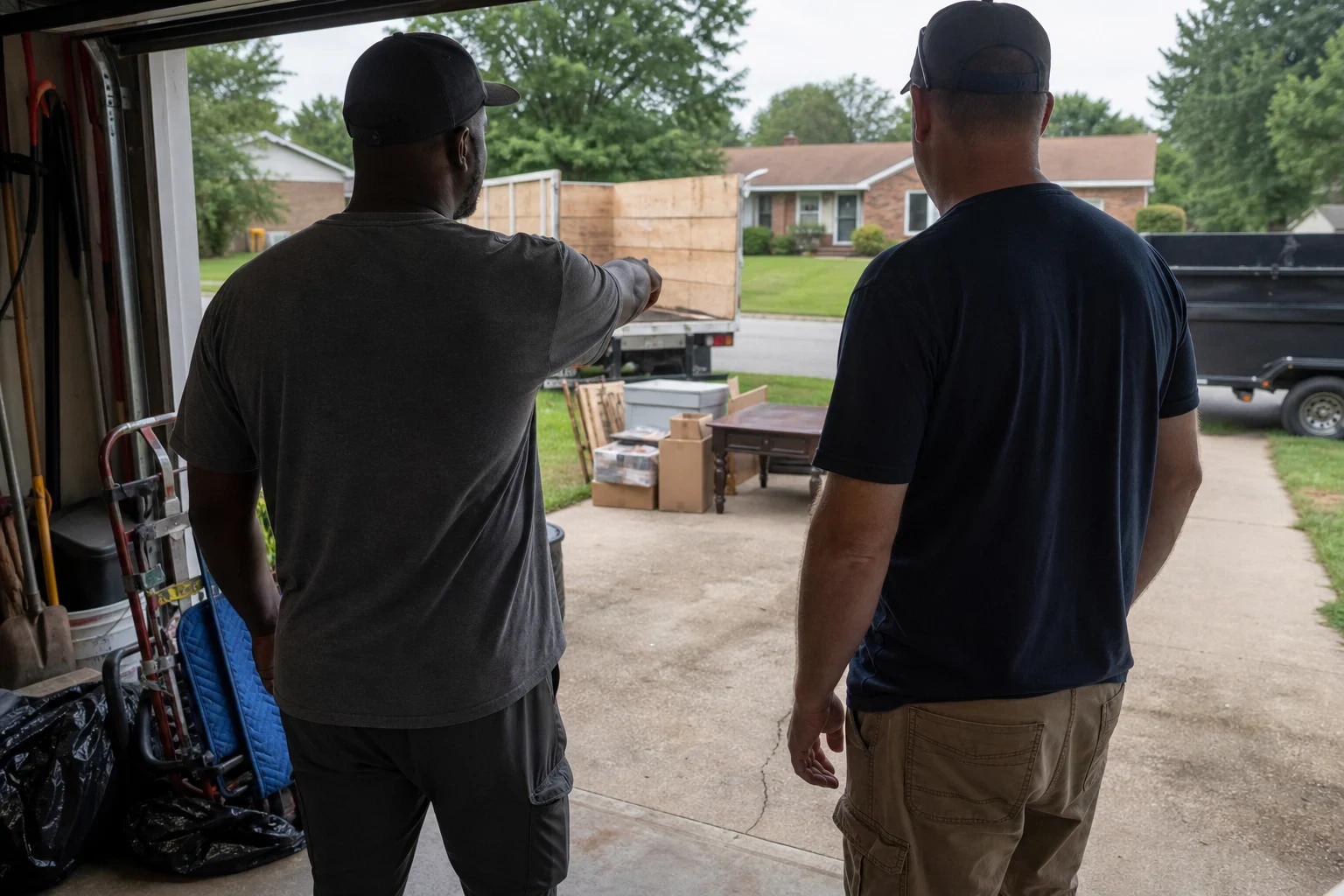
Questions about hauling appliances
Should I disconnect the appliance ahead of time?
If it runs on electricity and plugs into a standard outlet, we unplug and move it ourselves. Gas ranges, gas dryers and water heaters plumbed in place must first be shut off and disconnected by a plumber or gas technician. At the estimate we will let you know which case fits your unit.
Where does the refrigerant in my old fridge go?
The sealed system stays whole, and we bring the unit to a recycler who recovers the refrigerant before processing the metal. We never cut the lines or let the gas out.
Do you haul appliances that still run?
We do. Working units get the same handling, and when we can, we send usable ones toward reuse rather than scrap.
Can a fridge come up out of a narrow basement?
In most cases, yes. We measure the stairs and the turn at the top, and we may take off the fridge doors to win an inch or two. If a unit really won't fit, you hear it at the estimate rather than on job day.
Why should I trust your crew?
We started in 2021, we carry a license and insurance, and customers have left us over 1,200 Google reviews. Look through some before you pick up the phone.
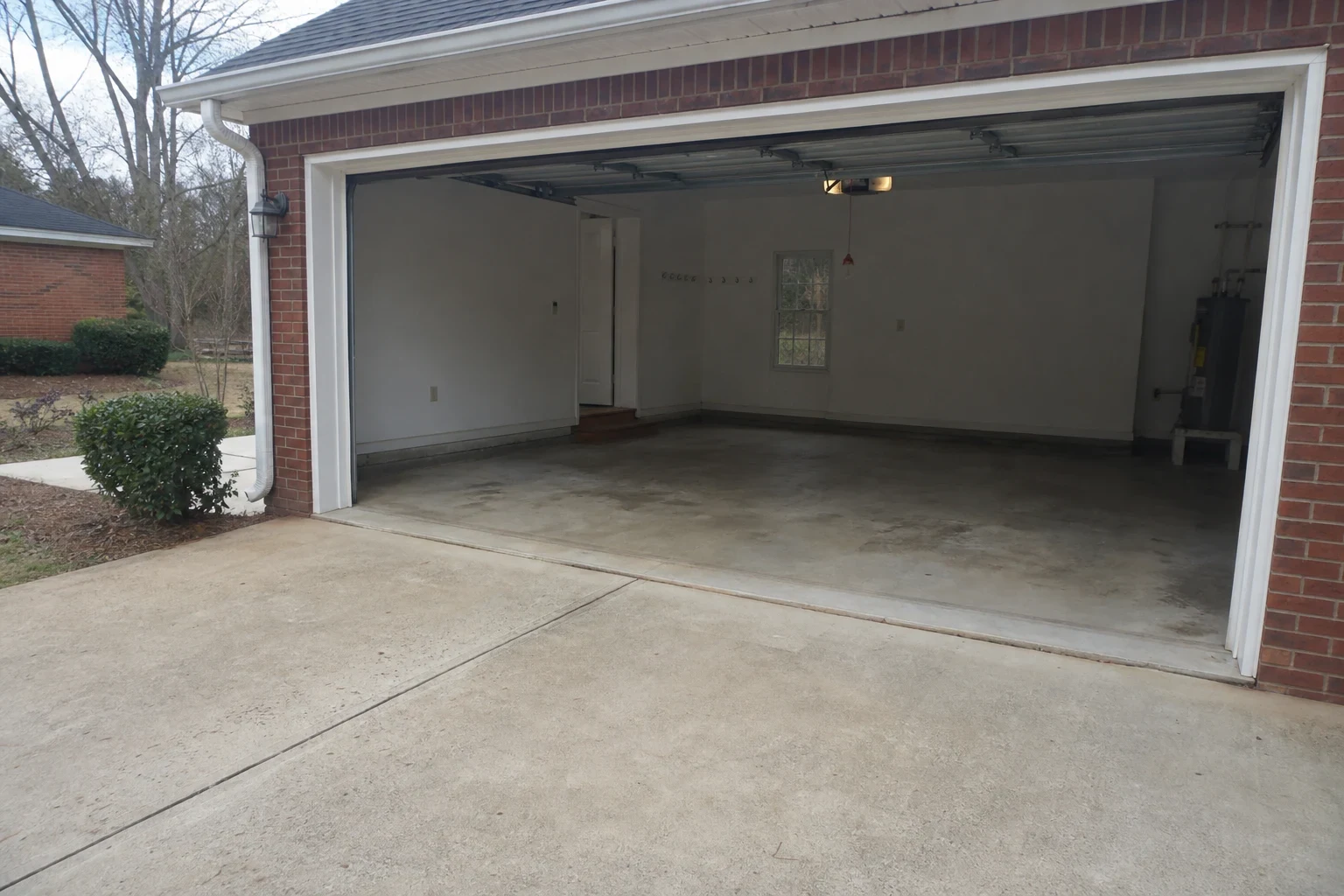
Clear out that old appliance
Let us know what the appliance is and where it is in your home. We will stop by, quote an upfront price, and map out the carry so floors and doorframes stay unmarked.